
Pet Quality of Life Assessment Calendar
Making decisions about a beloved pet's final chapter is one of the hardest responsibilities we face as pet owners. Many families tell us the same thing:
"I just don't know when the right time is."
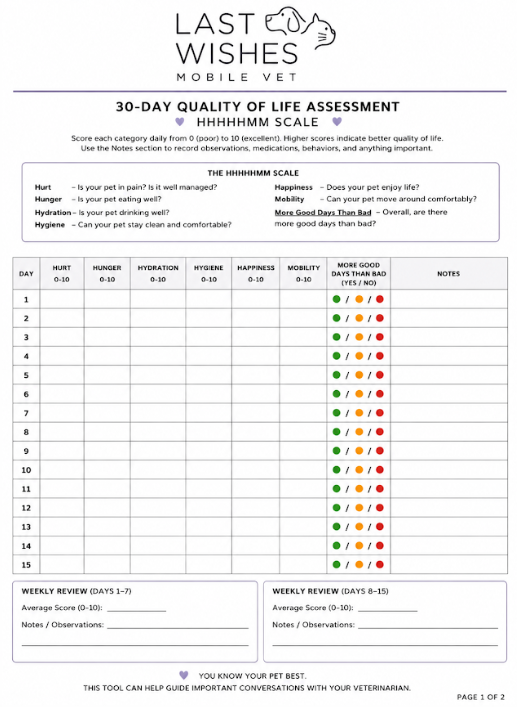
What Is a Quality of Life Calendar?
A quality of life calendar is a simple daily record that helps you track how your pet is coping over time.
Rather than relying on memory alone, you record each day's overall quality of life using colours, symbols, or scores. For example:
🟢 Good Day
Your pet is comfortable, eating well, engaging with family, and enjoying normal activities.
🟡 Mixed Day
Some good moments, but signs of discomfort, reduced appetite, mobility struggles, or confusion.
🔴 Bad Day
Your pet is reluctant to eat, struggling to move, appears uncomfortable, withdrawn, anxious, or unable to enjoy the things they once loved.
Over days and weeks, the pattern becomes much clearer.
Scores below 5 indicates that your pet currently doesn’t have a good overall quality of life.
Why Is It So Helpful?
One of the challenges of caring for an ageing or seriously ill pet is that we tend to focus on what's happening right now.
A good day can fill us with hope.
A bad day can leave us devastated.
When emotions are involved, it's easy to lose sight of the overall trend.
A quality of life calendar provides a more objective view. Instead of asking:
"How is my pet today?"
It helps answer:
"How has my pet been over the last month?"
This broader perspective often brings clarity during an incredibly emotional time.
Looking Beyond Good Days
Many pets experience fluctuations in their condition.
You may notice:
A brighter day after several difficult ones
A temporary improvement after medication changes
A burst of energy before a decline
Better mornings but difficult evenings
These ups and downs are normal in many chronic conditions.
The goal isn't to count occasional good days. It's to identify the overall balance between good and bad days.
When bad days begin to consistently outnumber good days, it may indicate that your pet's quality of life is declining despite treatment.
What Should You Record?
Your calendar doesn't need to be complicated.
Each day, consider:
Appetite
Are they eating willingly?
Do they still enjoy favourite treats?
Mobility
Can they get up comfortably?
Can they walk without significant difficulty?
Comfort
Are they resting peacefully?
Are there signs of pain or distress?
Happiness
Do they seek interaction?
Do they still enjoy favourite activities?
Hygiene
Are they able to toileting normally?
Can they keep themselves clean?
Breathing
Are they breathing comfortably at rest?
Overall Enjoyment of Life
Did they experience pleasure today?
Were there moments of contentment and engagement?
After considering these areas, give the day an overall rating.
What the Calendar Can Reveal
Many families are surprised by what they discover.
A pet who seems to have had a "good week" may actually have had five difficult days and only two good ones.
Conversely, some owners realise their pet is still enjoying many aspects of life despite having a serious diagnosis.
The calendar removes some of the uncertainty and provides valuable information when discussing options with your veterinarian.
It Can Ease Feelings of Guilt
One of the greatest burdens owners carry is worrying:
"Am I making this decision too soon?"
Or:
"Have I waited too long?"
A quality of life calendar won't make the decision for you, but it can provide reassurance that your choices are based on your pet's wellbeing rather than a single difficult day.
When families look back and see a clear pattern of decline, many find comfort in knowing they are acting from a place of love and compassion.
A Simple Example
Imagine a calendar for a dog with advanced arthritis and cancer.
Week 1: 🟢 🟢 🟡 🟢 🟡 🟢 🟢 6
Week 2: 🟡 🟡 🟢 🟡 🔴 🟡 🟡 3.5
Week 3: 🔴 🟡 🔴 🔴 🟡 🔴 🔴 1
The overall trend becomes clear. While there are still moments of happiness, the difficult days are becoming more frequent.
This information can help families recognise when their pet may be approaching the point where a peaceful goodbye is the kindest option.
Trust Yourself
No calendar can measure the bond you share with your pet.
No score can capture every wag of a tail, gentle purr, or loving glance.
But a quality of life calendar can help you see through the emotion and uncertainty that naturally accompany end-of-life decisions.
It provides a compassionate way to monitor your pet's wellbeing and ensure their comfort remains at the centre of every choice you make.
How Last Wishes Mobile Vet Can Help
If you're struggling to assess your pet's quality of life, you're not alone.
At Last Wishes Mobile Vet, we support families through every stage of the end-of-life journey. We can help you evaluate your pet's comfort, discuss quality of life concerns, and guide you through difficult decisions with empathy and understanding.
Our goal is simple: to help pets experience a peaceful, dignified farewell in the comfort of their own home, surrounded by the people who love them most.
Because when the time comes, no one should have to face it alone. ❤️